Knowledge jobs the future of Melbourne’s prosperity
Article first published on The Mandarin on 07th
December 2018
Below is a lightly edited version of a speech
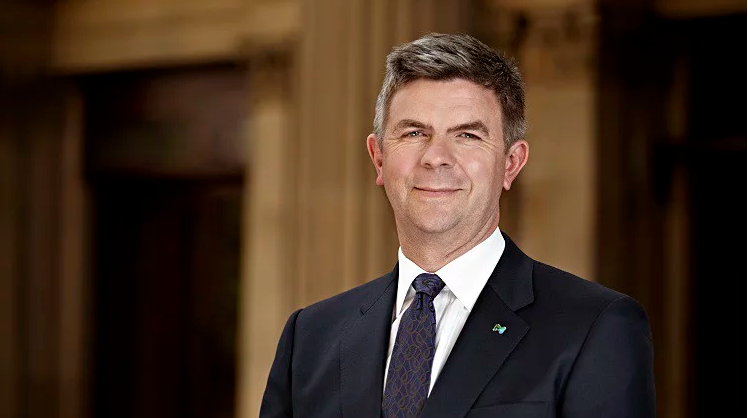
Ben Rimmer gave at a CEDA trustee boardroom briefing on Wednesday, December 5.
The site of modern-day
Melbourne has a long history of being a great place to gather. In fact, the
settlement of Melbourne developed in what was a traditional meeting place for
the Aboriginal people of the Kulin nation.
While this tradition
was severely disrupted by European settlement, the idea of Melbourne as an
exceptional place for people to meet, build trust and create value remains
central to Melbourne’s identity. We value our Aboriginal history. We speak our
230 languages, and over 50% of the inner city’s population were born overseas.
As I suggest today, these characteristics will also drive our future
prosperity.
I’d like to make four
main points today:
- Firstly, productivity growth in central
Melbourne is our biggest economic challenge.
- Productivity in the knowledge economy is
also about place.
- Melbourne is better placed than any other
global city to take advantage of this.
- We can’t succeed unless we name the right
problem and work out how to collaborate:
-Commonwealth/state/local government
-Public/private
-Individuals/communities/firms
Cities Matter and
Melbourne’s growth
There is no doubt that
Melbourne is a city in the middle of serious economic growth and its success is
driving the economic prosperity of not only Victoria but also the nation.
In 2017, the City of
Melbourne generated $95 billion in economic value, representing a quarter of
Victoria’s gross state product and 6% of Australia’s GDP. Within metro
Melbourne, the inner-city area accounted for nearly 40% of the whole city’s
output in 2017. With our neighbours in Yarra and Port Phillip, we house most of
Melbourne’s output, most of Melbourne’s knowledge jobs, and most of our IP
generation.
One of the promises of
communications technology was that humanity could become more dispersed, as it
becomes easier for people to live and work in regional centres or from home.
However, Australia’s population is becoming concentrated in a few major centres
– one of them being Melbourne.
The population of
greater Melbourne is now 5 million and population is projected to rise to eight
million in 2050. That makes Melbourne not just Australia’s fastest growing
city, but also one of the fastest growing cities in the developed world.
Some say that this
growth is a problem. I say sure, we can do better on infrastructure, but that
the growth is the result of powerful economic forces that trounce the
thousands of bureaucratic pens trying to hold back the tide with their planning
reports.
Melbourne as an
emerging global city
McKinsey Global
Institute recently analysed 3,000 of the world’s largest cities – those that
represent two-thirds of global GDP. Within this group, it defined 50 as
superstars: cities that hold only 8% of the world’s population but account for
21% of GDP, 37% of high-income urban households and 45% of firms with more than
US$1 billion in annual revenue.
The list of leaders
included the likes of Boston, Frankfurt, London, Manila, Mexico City, Mumbai,
New York, São Paulo, Sydney, Tianjin and Wuhan.
Although Melbourne
didn’t make it onto the MGI list, it ranked as the 15th most influential global
city on A.T. Kearney’s Global Cities 2017 report and sixth in terms of its
likelihood to become more influential in the future, due to the wellbeing of
its people, the strength of its economy, its stable governance and its support
of innovation.
When considering
either of these lists, it is clear that while size is important it is not the
only thing that matters – what makes a city a super star or global city is its
supremacy in an important sector.
For example, while New
York and London have dominated since the industrial age, places like Hong King
and Singapore have flourished as trading hubs, Washington and Brussels are
renowned as the two great centres of government and more recently San Francisco
because of its high-tech dominance.
Boston is far and away
the world leader as a knowledge city with its unparalleled density of leading
universities and startups.
And while there would
be quite a leap for Melbourne to get to this level, as shown by the Global
Cities report, Melbourne is widely acknowledged as an emerging force in
knowledge and innovation.
Interestingly, our
community don’t always see it that way, and that dichotomy between community
expectations and global perceptions creates real challenges.
Melbourne needs
productivity growth
Growth and
transformation is not new for Melbourne – from first European settlement, the
growth of the gold rush and more recently the transformation of the city over
the last 30 years.
For this reason, I am
cautious of some of the hyperbolic language currently being used to describe
the challenges posed by Melbourne’s rapid population growth. But there is no
doubt that the growing pains are being felt in our cities crowded trains, roads
and footpaths, homelessness and housing shortages and increasing load on our
services.
Population growth has
for a long time been the main driver of Melbourne’s economic performance; as
the population grows, so does the output, but it is shared among a larger
number of people. For this reason, a conversation about Melbourne’s future
prosperity must surely be focused on how we capture, enhance and target
productivity growth.
In general, I believe
that productivity is not used sufficiently our focus in the public debate of
Australia’s economic prosperity, or Melbourne’s. When it is, it is limited to
traditional concepts of market competition, business efficiencies and lower
cost structures. Through this lens the role of government is reduced to deregulation
and arm’s length facilitation of private sector investment and innovation.
I am convinced that a
conversation about productivity as we move further into the so-called fourth
industrial revolution is a conversation that explores the intersection of
knowledge, place and talent and how this can be driven through the
collaboration of public and private sectors. This is the debate Melbourne
needs, not one focused only on corporate tax cuts or deregulation of
pharmacies.
Innovation districts:
a quick overview
The essence of this
type of productivity growth is the birth of innovation districts – innovation
districts or clusters are urban living labs that support the commercialisation
of knowledge.
The Brookings
Institution speaks of three key assets required to support innovation districts
– the combination of networking, economic and physical assets. It is where the
public realm of our cities becomes the focal point for entrepreneurs, startups,
researchers, corporates and investors to collaborate and commercialise the next
generation of jobs and businesses.
Innovation is no
longer dominated by places like Silicon Valley that have very little focus on
the actual place or life of those who work there.
But the Brookings
Institute model should not be thought of as a cookie cutter that can be picked
up and put down anywhere – this would miss the visceral nature that innovation
clusters develop and the need for them to be profoundly grounded in place.
Liveability is
Melbourne’s competitive edge
The transformation of
Melbourne city centre over the last 30 years means it is particularly well
placed to take advantage of the opportunities that innovation and knowledge as
the driver of economic prosperity hold.
Everyone in this room
will remember what Melbourne was like 30 years ago in the 1980s. Back then,
there was no street life. It was a city that catered for cars, not people.
After hours, we had a CBD of grey, empty office towers.
Fast forward to 2018,
and it’s a very different story. Through bipartisan efforts and state and local
alignment so much has been achieved in Melbourne. Through careful urban design
and deliberate policy making, Melbourne’s streets and laneways are now vibrant
and sophisticated.
Melbourne has
excellent physical infrastructure and many supportive social and economic
characteristics. Melbourne features one dense central city area that features
an integrated mix of commercial offices, hotels and residential accommodation,
making it easy to walk – or ride a bike, or catch a free tram – to meetings and
events.
By design, the city is
dotted with many restaurants, cafés, parks and public spaces where people can
interact and this produces one of Melbourne’s key assets, its unique culture
and ambience. It is among the most multicultural and diverse cities in the
world, and heavily integrated with other global centres. Not to mention, it is
internationally recognised for its creativity from its music venues, art
galleries and film festivals.
For all of these
reasons and more – Melbourne is consistently ranked as one of the world’s most
liveable cities. In a global competition to be an emerging knowledge and
innovation centre, this is Melbourne’s competitive edge.
Melbourne’s knowledge
economy so far
Already, Melbourne’s
knowledge economy contributes almost $60 billion to its gross local product.
There are 1,100 tech startups in Melbourne – twice the average of other
ecosystems at similar developmental stages. The rate of employment in the
knowledge sector continues to grow and now accounts for more than half of the
jobs growth in our municipality over the past decade.
The number and variety
of innovation clusters that are already in Melbourne is exciting — from
Fishermans Bend Employment Precinct (advanced manufacturing) to the Melbourne
Innovation District (engineering, design, and a mix of industry), and other
clusters emerging in Collingwood, Fitzroy, Prahran and Richmond just to name a
few. This model of multiple clusters coming together in one city was
recently called out as a potential game changer in how innovation and knowledge
cities are seen.
Melbourne Innovation
District
Launched in June 2017,
the Melbourne Innovation Districts (MID) is a partnership between the City of
Melbourne, RMIT University, and the University of Melbourne, to develop urban
innovations in Melbourne.
The first MID is
focused in the area known as City North – a significant area to the north of
the Melbourne city grid – that is home to many of the city’s education,
knowledge, research and innovation institutions.
The area is currently
home to 21% of all knowledge sector jobs in the City of Melbourne and hosts the
majority of the municipality’s 227,000 students (including 35,000 international
students). MID City North was the site of Melbourne’s first playground,
Melbourne’s first women’s hospital and Melbourne’s first university.
The concentration of
life sciences organisations in the City North is now regarded as one of the top
five biomedical precincts in the world. Some 53% of ASX-listed life sciences
companies are based in Melbourne and the city attracts more than 40% of
Australia’s medical research funding and associated researchers. The City North
area is also home to the $1 billion Victorian Comprehensive Cancer Centre and
the Melbourne Brain Centre, both ranked among the leaders in their respective
fields of cancer and neuroscience research and services globally.
This area is
experiencing major infrastructure investment from the City of Melbourne,
Victorian state government, and the universities in the area including: Queen
Victoria Market Renewal, RMIT New Academic Street, University of Melbourne Carlton
Connect and Student Precincts, State Library ‘smart space’ refurbishment,
Melbourne Bio-medical Precinct, the construction of two stations for the
Melbourne Metro, and several upgrades to urban streets and historic parks.
The combination of
these knowledge and innovation functions, the volume and density of knowledge
workers, students, and visitors they attract, plus the extensive investment in
infrastructure and facilities is unprecedented and creates an environment
primed for cutting edge innovation.
Micro level reform
The collaboration
between City of Melbourne, state government and universities to create MID is
an example of the extraordinary promise of productivity growth and high value
jobs that is achieved when there is a shared commitment to investing in a place
to enhance its unique characteristics.
There is too much
focus on macro level responses to the challenges posed by population growth –
migration patterns, for example, or panic about road congestion.
I am here today to
argue for micro city reform that is grounded in place. This type of investment,
as shown by the outputs already from the investment at both state and local
government level in MID, is how real gains in economic prosperity will be
derived.
This is not
necessarily about additional expenditure, as innovation clusters are part of
the normal development of the city. It is about getting to grips with the
visceral development of places and provided targeted support – appropriate for
the place.
I am putting the case
out there that we need a shared national consensus on building great places.
One level of government cannot serve the community effectively in this area
alone or without collaboration with the private sector.
In conclusion, I want
to leave you again with the following four observations:
Productivity growth is
the key to the next 30 years of economic prosperity. It means more than just
driving business efficiencies – it is how knowledge, talent and place intersect
to drive innovation.
The fact that
Melbourne is a place for people gives it a competitive edge over other cities
vying to be the next global leader in this sector. We need to value liveability
as an economic asset, not just as a ‘nice to have’.
Melbourne’s prosperity
will be driven by micro city reform that is grounded in place. The investment
in the budding innovation clusters around Melbourne will not only drive
Melbourne economic growth, it will create jobs and spread the benefits of a
high standard of living to the broader community.
Finally, we are all in
this together, and it is time for us to be bold to make the most of the
significant opportunity that is available.
I argue that Melbourne
is better placed than any other global city to take advantage of the economic
opportunities of the next 30 years. But we will only deliver on this if we’re
clear about what matters, what we need to enhance, and how we work together to
achieve our goals.
Learn more about
Australia’s knowledge and innovation future at the Research Innovation &Commercialisation Summit 2019.